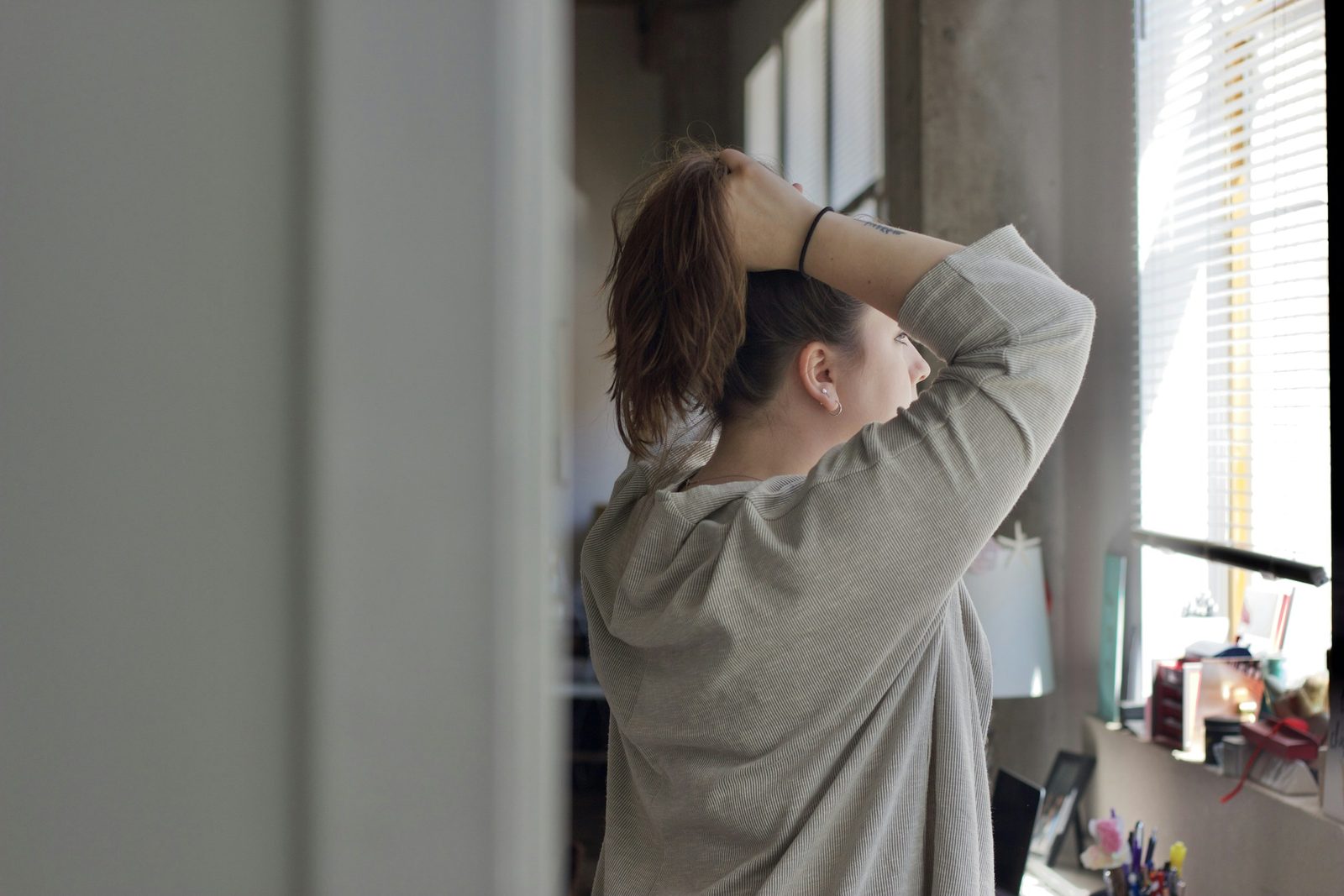
If you spend most of your day at a desk, you probably know the feeling: stiff hips when you stand up, tight shoulders, a sore neck by the afternoon. It is tempting to blame your chair or your posture. The reality is simpler. Our bodies are built to change position, and a day spent in one shape leaves some joints under-used.
The good news is that you do not need a long routine to feel better. You need small, regular movement and a handful of exercises that target the areas desk work tends to stiffen.
Sitting is not the villain
Sitting is a normal position. The trouble comes when it is the only one, for hours at a time. Rather than hunting for a "perfect" posture, aim for variety: sit, stand, walk, shift your weight, and change your position often.
Movement snacks beat one big session
A 60-second break every 30 to 60 minutes does more for stiffness than a long stretch once a day. Try:
- Stand up and walk to refill your water.
- Take phone calls on your feet when you can.
- Set a gentle timer and do two or three of the movements below.
Where desk workers tend to feel stiff
- Hips. Long sitting keeps the hips bent, which can make the fronts of your hips feel tight.
- Upper back. Rounding forward over a keyboard reduces how much the upper back rotates and extends.
- Shoulders and neck. Arms reaching forward and a head held ahead of the body can leave this area tired.
A 10-minute mobility routine
Do each move slowly, breathing normally. Stay in a comfortable range. You are looking for a gentle stretch or a feeling of movement, never pain.
- Walking warm-up, 1 minute. Walk around the room, swinging your arms.
- Cat-cow, 8 slow reps. On hands and knees, round your back, then lower your belly and lift your chest. It wakes up the spine.
- Half-kneeling hip stretch, 30 to 45 seconds each side. Kneel on one knee with the other foot forward. Tuck your pelvis slightly and gently move your hips forward until you feel a stretch at the front of the back hip.
- Thoracic rotation, 8 reps each side. On hands and knees, place one hand behind your head and turn your chest toward the ceiling, then back.
- Wall slides, 8 to 10 reps. Stand with your back near a wall, arms bent, and slide your arms up and down without arching your lower back.
- Hip hinge, 8 to 10 reps. Push your hips back with a soft knee bend, keep your back long, then stand tall. It teaches your hips to do the bending instead of your lower back.
- Glute bridge, 10 reps. Lie on your back, knees bent, and lift your hips. This strengthens the muscles that sitting tends to switch off.
- Neck and shoulder reset, 1 minute. Gently drop one ear toward the shoulder, hold briefly, and repeat on the other side. Roll your shoulders back a few times.
You can split these into two or three mini-sessions across the day.
Strength helps mobility last
Stretching alone can feel good, but mobility sticks better when you pair it with strength. If your muscles can control a new range of movement, your body is more likely to keep it. Simple exercises like sit-to-stands, rows and carries are a good start.
Small changes to your workday
- Raise your screen so your eyes are near the top third of it.
- Keep frequently used items within easy reach to avoid over-stretching.
- Use a laptop stand or an external keyboard if you work from a laptop.
- Take a short walk at lunch, even 10 minutes.
When to get it checked
Tight and stiff is common. Numbness, tingling, pain that travels into an arm or leg, weakness, or pain that keeps getting worse needs a professional opinion. This article is general education and does not replace advice from your doctor or physiotherapist.
Want a routine built around you?
If you have a specific stiff spot, an old injury or a schedule that makes it hard to stay consistent, personal guidance can help you choose the few movements that matter most for you.